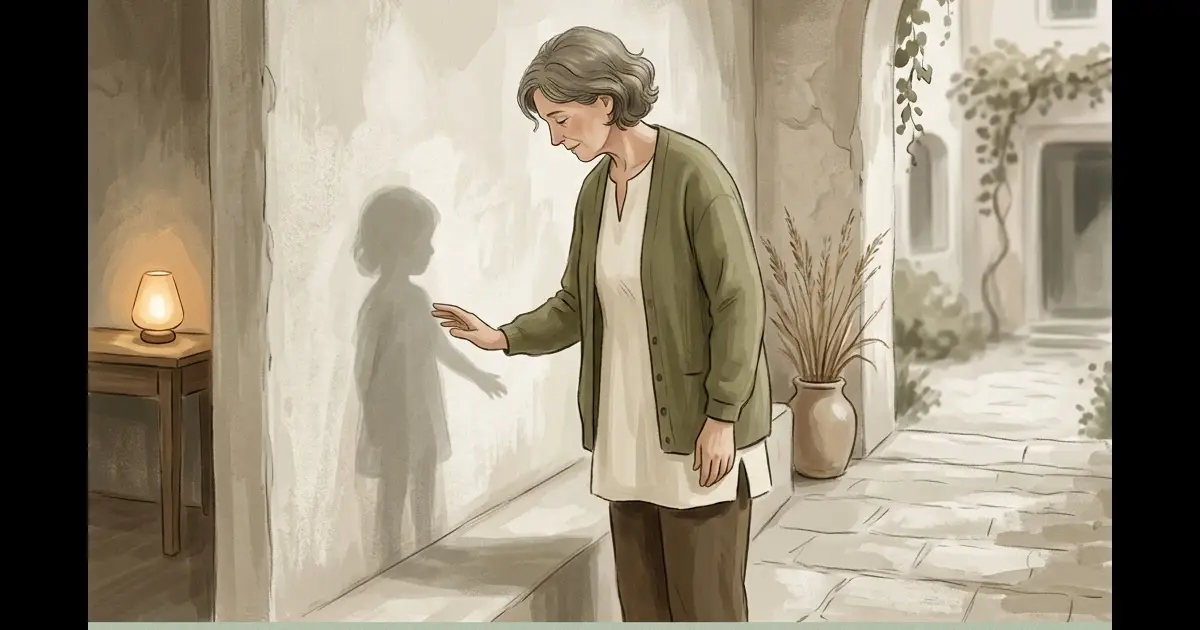
The most common signs of a wounded inner child in adults are harsh self-criticism, people-pleasing, fear of abandonment, difficulty setting boundaries, perfectionism, and emotional reactions that feel far bigger than the moment that triggered them. These are not character flaws. They are old protective strategies a child developed to stay safe, still running quietly in the background of adult life.
Recognising them is the first step. From there, the practical work begins with inner child healing exercises.
10 common signs
- A loud inner critic. A harsh internal voice that echoes how you were once spoken to or judged.
- People-pleasing. Putting others’ needs first and struggling to know your own, because approval once felt like safety.
- Fear of abandonment. Anxiety when people are distant, or a pull to cling or leave first. More on this in inner child meditation for abandonment.
- Difficulty with boundaries. Saying yes when you mean no, or feeling guilty for having limits at all.
- Perfectionism. Feeling that you are only acceptable when you achieve or perform.
- Outsized reactions. Small triggers producing big waves of shame, anger, or panic, often because an old wound has been touched. See why relationship triggers come from your inner child.
- Trouble trusting. Expecting to be let down, criticised, or controlled in close relationships.
- Chronic “not enough.” A background belief that you are fundamentally lacking, no matter the evidence.
- Emotional numbness or avoidance. Disconnecting from feelings because they once felt unsafe, common in avoidant attachment.
- Self-sabotage. Undermining good things, because safety, success, or love feels unfamiliar or undeserved.
Where these signs come from
None of these appear at random. They usually form when childhood needs for safety, attunement, or validation went unmet, through neglect, criticism, loss, instability, or trauma. A child cannot change their environment, so they adapt themselves: become small, become perfect, become independent, become invisible. Those adaptations were intelligent then. The trouble is they keep running long after they are needed.
What to do if you recognise yourself
Seeing the pattern is not the end, it is the opening. The work is to meet the younger part underneath each sign with care instead of frustration. That happens through practices like inner child dialogue and reparenting yourself, repeated gently over time. If the wounds are deep or tied to trauma, do this alongside a therapist.
A supportive first step
You do not have to do this from a standstill. A free personalized inner child meditation, made by a therapist around your own story, gives the younger part of you a felt experience of being seen, which is exactly what most of these signs are waiting for.