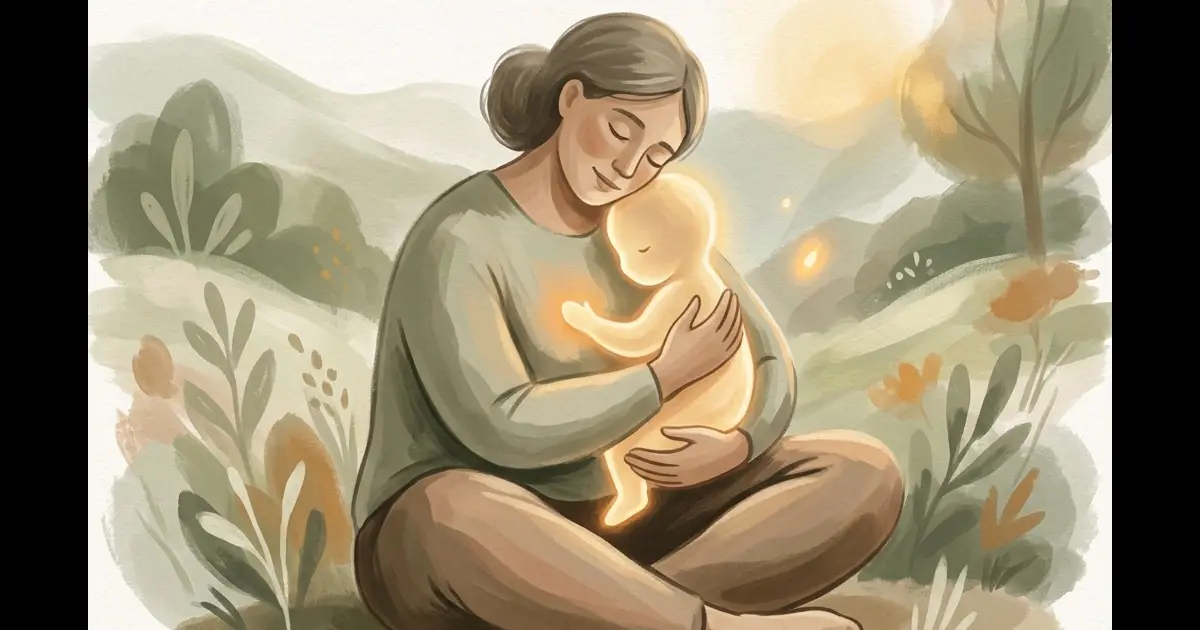
Fear of abandonment usually traces back to a younger self who once felt left, unseen, or unsafe when they most needed someone to stay. An inner child meditation helps by guiding you back to that part with calm and reassurance, so it finally receives the steady presence it missed. Practiced gently and regularly, it teaches the nervous system that being alone is not the same as being abandoned, and the old panic begins to soften. If your wounds stem from overwhelming events rather than absence, the gentler, safety-first approach in inner child meditation for trauma may fit better.
This is one focused use of inner child healing meditation, aimed specifically at the abandonment wound.
Where the fear of abandonment comes from
Fear of abandonment is rarely about the present person or situation. It usually forms early, through inconsistent care, loss, or emotional neglect, when love felt unpredictable. A child in that environment draws a reasonable conclusion: closeness is fragile, so I must stay alert in case it disappears. That vigilance, carried into adulthood, becomes anxiety when a partner is distant, over-reading of small signals, or a painful pull to cling or to flee first. It often overlaps with anxious attachment.
Why meditation reaches it
You cannot reason your way out of an abandonment fear, because it lives in the body as a felt sense of danger. Meditation reaches it because it works at that same level. By slowing the breath and turning toward the frightened young part with warmth, you give the nervous system a direct, felt experience of safety. Repeated over time, these experiences gradually update the old expectation that closeness will collapse.
A simple inner child meditation for abandonment
Set aside five to ten minutes somewhere quiet. Read this through first, then practice with your eyes closed.
- Settle. Sit or lie comfortably. Take several slow breaths, making the exhale a little longer than the inhale, until your body feels a touch heavier and calmer.
- Find the feeling. Bring to mind a recent moment of abandonment fear. Notice where it lives in your body, perhaps a tightness in the chest or stomach. You are not trying to fix it, only to locate it.
- Meet the younger you. Let an image of your younger self appear, the age this fear feels like it belongs to. See them as they were when they felt most alone.
- Offer presence. Imagine sitting beside that child. Let them know, in your own words: “I am here. I am not leaving. You are not alone now.” Stay long enough for the words to land.
- Stay through the feeling. If sadness or fear rises, keep breathing and keep the child company. The healing is in staying, not in making the feeling vanish.
- Close gently. Promise the child you will return, take a few breaths, and slowly open your eyes.
Practicing this when you are calm, not only during a wave of panic, builds a steadier baseline you can draw on later.
When to get extra support
If abandonment fear is rooted in significant trauma, or meditation leaves you flooded rather than soothed, work alongside a therapist. There is no failure in needing a steady companion for this; in fact, a consistent, reliable presence is exactly what the wound is asking for.
A meditation made for your story
Generic recordings can only speak in general terms. An abandonment wound responds best to language and pacing shaped around what you actually lived. That is why My Inner Center sessions are built individually: you can request a free personalized inner child meditation, created by a therapist around your own story, as a gentle place to begin. To understand why that personalization matters, see why personalized inner child work is essential.