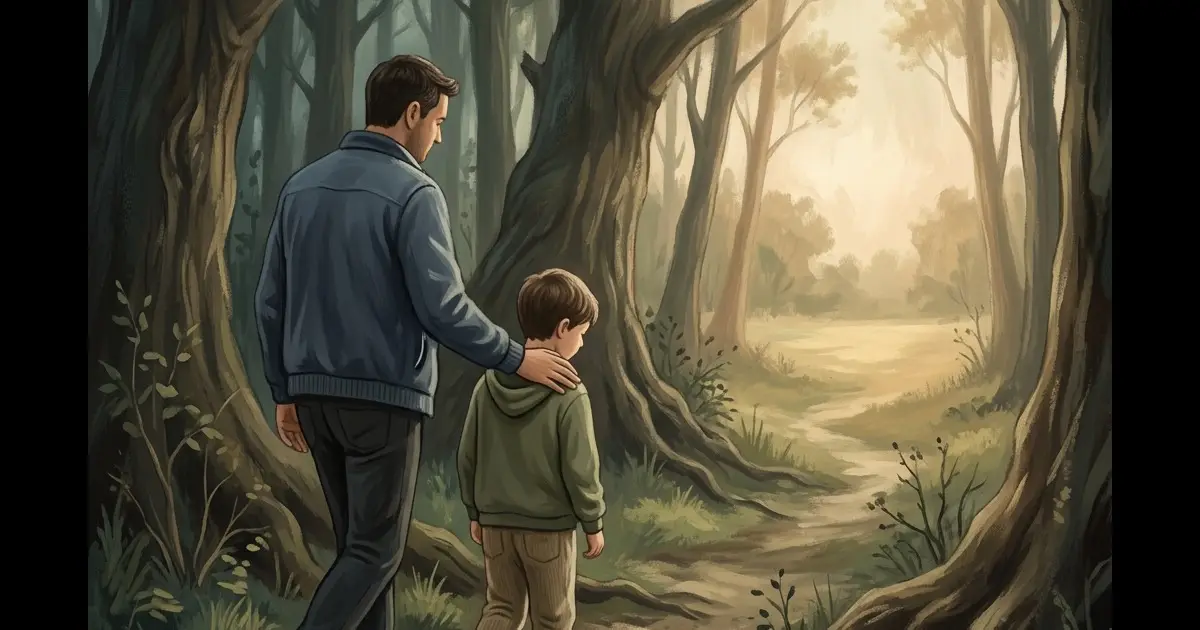
Inner child meditation can support trauma healing by helping you bring safety and compassion to the younger part of you that still holds the pain. But this is the one area of inner child work where care matters most: meditating on trauma without enough safety can overwhelm the nervous system rather than soothe it. Done gently, slowly, and ideally alongside a trauma-informed therapist, it can be genuinely healing. Done too fast or alone with deep wounds, it can re-trigger. Safety comes first, always. If your pain is more about being left than about overwhelming events, see inner child meditation for abandonment.
If your wounds are more about unmet needs than overwhelming events, you may prefer the gentler starting points in our inner child healing meditation tips.
Why trauma needs a different, slower approach
Trauma is not just a bad memory; it is an experience the nervous system never finished processing, stored as a felt sense of present danger. That is why a traumatised part can flood you when touched. Meditation helps because it works at the level of the body and safety, but the same power that makes it useful also means it must be paced. The guiding principle is titration: approaching the pain in small, manageable doses, pausing to regulate, and never forcing.
Safety first: read this before you practice
- Work with a therapist if you have significant trauma. Use meditation as a complement, not a replacement, for professional care.
- Stay in the window of tolerance. The aim is to feel something while still feeling safe. If you tip into panic or numbness, you have gone too far, too fast.
- Ground before and after. Begin and end by feeling your feet, your seat, your breath, and naming a few things you can see and hear.
- You can stop anytime. Opening your eyes and grounding is not failure. It is the skill.
A gentle, grounded practice
This is intentionally cautious. Do not revisit specific traumatic events here; that work belongs with a therapist. This practice builds safety and contact, which is the foundation everything else rests on.
- Ground. Sit comfortably. Feel the support beneath you. Take slow breaths with a longer exhale until your body settles a little.
- Find an image of safety. Before meeting any younger part, picture a place or presence that feels calm and safe. This is your anchor to return to.
- Sense the younger part, from a distance. Rather than diving in, simply acknowledge that a younger part of you carries pain. You do not need to see details. Let it know you are aware of it.
- Offer safety, not exposure. Send that part a simple message: “I know you are there. You do not have to show me everything. You are not alone now.” Presence, not excavation, is the goal.
- Return to your anchor. Come back to your safe image, breathe, and feel your body.
- Close and ground fully. Open your eyes, look around the room, and reorient to the present before standing.
When to stop and seek support
If you feel flooded, dissociated, or numb, stop and ground. Persistent overwhelm, flashbacks, or feeling worse after practice are signs to pause solo work and reach out to a trauma-informed professional. This is strength, not failure. For the steady daily companion this work needs, see how to reparent yourself.
A session made for your story and pace
Generic trauma meditations cannot know your limits, which is part of what makes them risky. A session built around your history and pace can move at the right speed for you. My Inner Center meditations are created individually by therapists; you can begin with a free personalized inner child meditation and, for deeper trauma, keep a professional alongside you.