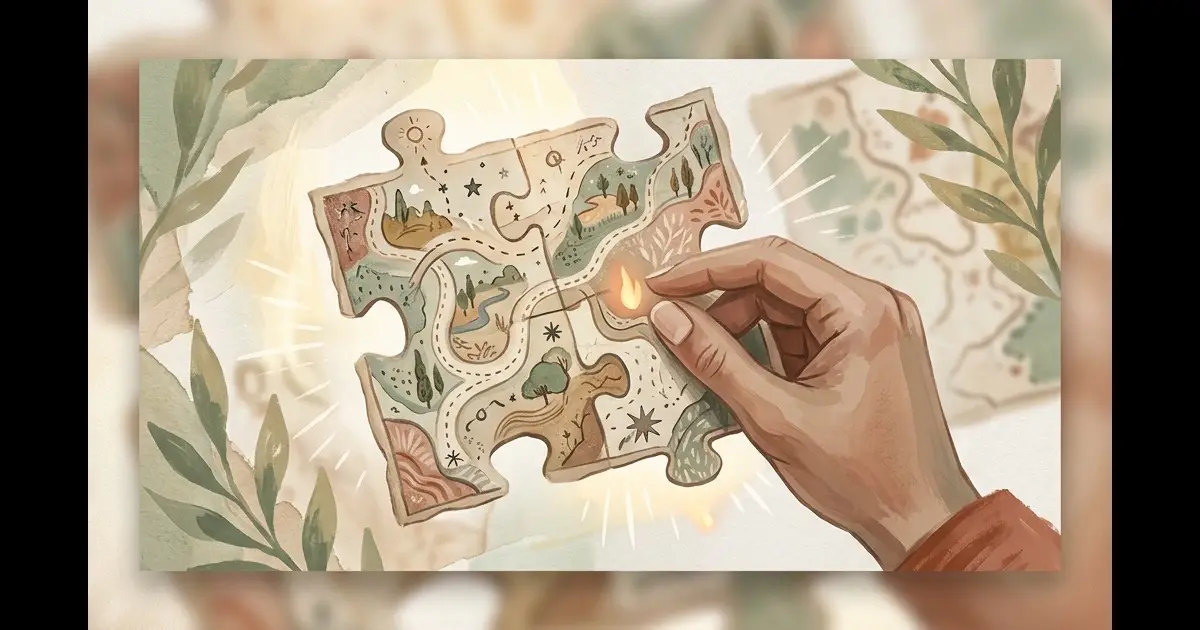
Inner child work is a process of reconnecting with the younger part of you that still carries the emotions, memories, and beliefs formed in childhood. By turning toward that part with care rather than judgment, you can ease patterns of anxiety, low self-worth, and relationship struggles that are rooted in early experience rather than in the present moment. It is less about analyzing the past and more about giving an old part of you what it once needed.
If you would rather jump straight to practice, the inner child healing exercises guide is the place to start. This article explains the idea itself.
Where the idea comes from
The “inner child” is partly a metaphor and partly a description of how memory and emotion actually work. Carl Jung wrote about the “divine child” as an archetype. More recently, Internal Family Systems, developed by Richard Schwartz, describes the mind as made of parts, including young, wounded ones that carry old pain. Attachment theory adds that we internalize our earliest relationships and carry those templates into adulthood. Inner child work draws these threads together into something practical.
What inner child work is not
It is not blaming your parents, getting stuck in the past, or self-indulgence. A wounded part is not a weakness to fix but a signal to listen to. Good inner child work always moves toward more responsibility and freedom in the present, not less.
How it helps in everyday life
Most of the patterns that frustrate us as adults, harsh self-criticism, fear of abandonment, difficulty saying no, are old survival strategies. When a present moment echoes an old wound, the younger part takes over and the reaction feels outsized. Inner child work helps you recognise these moments, soothe the part underneath, and respond as the capable adult you now are. Over time this changes how you relate to yourself and to the people closest to you.
What inner child work looks like in practice
The work is made of small, repeatable practices rather than one dramatic breakthrough. Common ones include:
- Inner child dialogue: talking to and listening to your younger self. See our guide to inner child dialogue.
- Reparenting: giving yourself the steady care and boundaries you missed, covered in how to reparent yourself.
- Guided meditation: using visualization and compassion, as in inner child healing meditation.
- Journaling, somatic grounding, and self-compassion practices.
Is it safe to do alone?
Gentle inner child work is safe and self-guided for most people. If you carry significant trauma, or if practices leave you flooded rather than soothed, work alongside a qualified therapist. A personalized meditation made by a therapist can be a supportive middle path.
A gentle place to begin
If this resonates, you do not need to figure it all out first. You can start with a free personalized inner child meditation, created by a therapist around your own story, and let the practice teach you the rest.