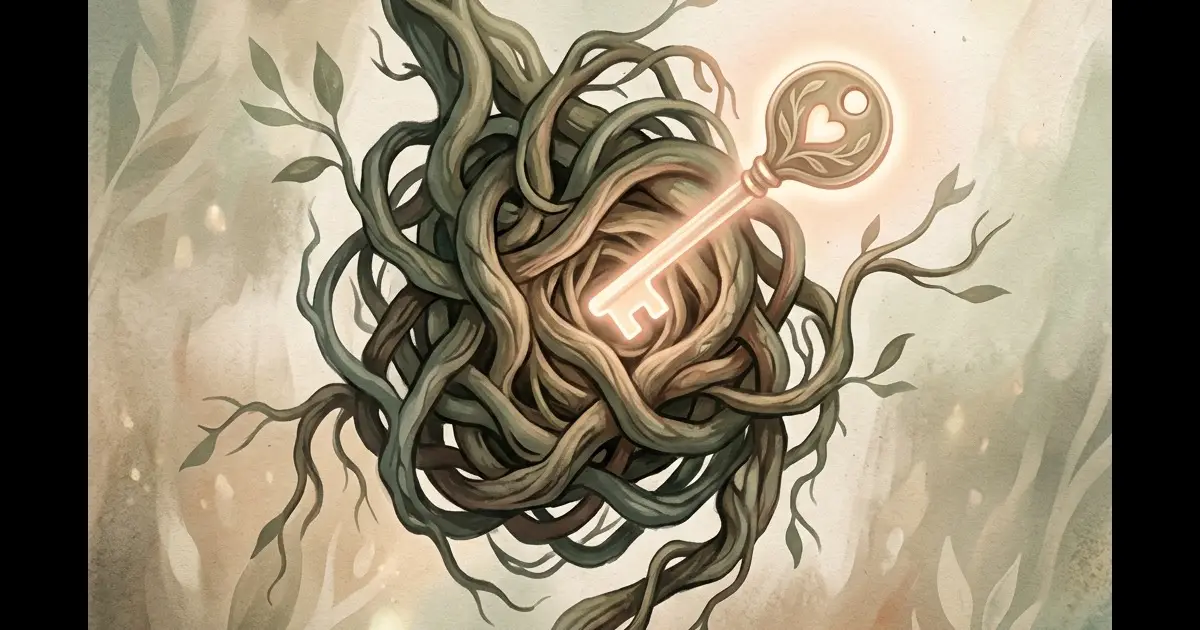
Why You Feel Stuck? 5 Life-Changing Insights from the book “How to Do the Work” by Nicole LePera
I read this book when it was first released, following Nicole on Instagram, and I highlighted so many passages that I really recommend it. Here is some of the wisdom I took from it.
The Universal Feeling of Being “Stuck”
It’s a feeling almost everyone knows: repeating the same self-defeating patterns, wanting to change but finding yourself back at square one, feeling adrift and disconnected. In her years as a clinical psychologist, Dr. Nicole LePera observed that “stuck” was the single most common word her clients used. But this was a truth she also knew intimately. Despite running a successful practice and being in a loving partnership, she felt hollowed out. Her “dark night of the soul” arrived one morning as she sat sobbing uncontrollably into a bowl of oatmeal, unable to ignore the deep sense of dissatisfaction with her life.
This personal crisis prompted a journey of discovery. Plagued by acute physical issues like brain fog, persistent gut problems, and even fainting spells, Dr. LePera realized traditional psychology was missing a crucial piece of the puzzle. In her revolutionary book, How to Do the Work , she introduces Holistic Psychology, a new approach that connects the mind, body, and soul to get to the root of why we feel this way. This article distills five of the most impactful truths from her work, offering a new lens through which to understand your patterns and begin the journey of healing.
Healing is a conscious process that can be lived daily through changes in our habits and patterns.
1. Trauma Isn’t Just What Happens To You; It’s How You Disconnect From You.
We tend to think of trauma as a catastrophic event—something that would score high on the Adverse Childhood Experiences (ACEs) scale. Dr. LePera expands this definition. While “big T” traumas are included, she argues that trauma also encompasses the more subtle, pervasive experiences of not being seen, heard, or allowed to be your authentic self as a child.
The core wound of this broader definition of trauma is the severing of the connection to our authentic Self. In order to receive love and ensure our survival, we learn to betray who we are.
Trauma occurred when we consistently betrayed ourselves for love, were consistently treated in a way that made us feel unworthy or unacceptable resulting in a severed connection to our authentic Self. Trauma creates the fundamental belief that we must betray who we are in order to survive.
This can happen in quiet, seemingly harmless moments. Imagine a child confiding that friends wouldn’t sit with them at the lunch table. A well-meaning parent might say, “It isn’t a big deal.” In that moment, the child, who is feeling legitimate pain, is taught that their perception of reality and their related emotional experiences are not trustworthy. This insight is crucial because it validates the deep-seated “stuckness” of many who may not have experienced a major catastrophic event but still carry the wounds of disconnection.
2. You’re Living on Autopilot, and Your Body Fights to Keep You There.
If you’ve ever wondered why it’s so hard to break a bad habit, this insight provides a stunningly clear answer. According to research cited in the book, we operate in a conscious, intentional state for only about 5% of the day. The other 95% is run by our subconscious autopilot—a program of conditioned thoughts and behaviors we learned in childhood.
Making change even more challenging is the “homeostatic impulse.” This is the body and mind’s powerful, evolutionary pull toward the familiar. Your subconscious loves the comfort zone because it’s predictable and therefore feels safe—even if that familiar state is one of pain or anxiety. When you try to make a new choice, your body perceives it as a threat. It triggers mental resistance (cyclical thoughts like, “This is too hard”) and physical discomfort like agitation or exhaustion. This isn’t a personal failure; it’s a predictable physiological response designed for survival. This resistance isn’t just a mental fight; it’s a physiological one. In fact, the body’s pull toward the familiar is so powerful that it can even become addicted to the very emotions that keep us in pain, which brings us to our next point.
3. Your Body Can Get Addicted to Stressful Emotions.
This is one of the most counter-intuitive yet powerful concepts in the book. Dr. LePera explains that our bodies can become physically addicted to the hormonal rush of certain emotions. If our childhood was characterized by chaos, anxiety, or anger, our bodies became accustomed to the accompanying hormones, like cortisol and adrenaline. As adults, our subconscious then seeks out or creates situations that replicate those familiar biochemical states.
Even if an emotion makes us stressed or sad, it often feels familiar and safe because it provides the same type of release that we experienced as children.
This explains a host of self-sabotaging behaviors. It’s why we might pick a fight when a relationship feels calm, feel drawn to unpredictable partners, or even get a “pleasurable charge” from watching outrageous news stories that make us angry. It reframes this behavior not as a character flaw, but as the body craving a familiar—though harmful—state. We aren’t just stuck in mental patterns; our physiology is actively working to keep us there.
4. Your “Personality” is an Ego Story Protecting a Wounded Inner Child.
According to Dr. LePera, we all have an “inner child”—a part of our psyche that carries the unmet needs and emotional wounds from our past. Protecting this vulnerable child is the ego. The ego isn’t just arrogance; it’s a “master storyteller” that creates narratives and core beliefs to keep us safe. Dr. LePera shares her own ego story, born from childhood experiences, which was a core belief that “I am not considered.” This story filtered her adult reality, causing her to have a disproportionately intense reaction—what she describes as “blind rage”—to something as simple as her partner leaving dirty dishes in the sink.
Many of our intense adult reactions are, in fact, our inner child’s wounds being activated. We are not reacting to the present moment but to a pain from the past.
The reality is that many of us are stuck in this childlike state. We are emotionally illiterate because we are little children in adult bodies.
Working with the inner child is a deep and emotional process. It requires creating a safe space to witness the pain that arises without judgment. This is where the support of a trained professional become essential tools for navigating this healing journey safely and productively.
At My Inner Center, we offer a free personalized inner child meditation created just for you.
5. True Healing Means Becoming the Parent You Needed But Never Had.
If our adult reactions are driven by a wounded inner child protected by an ego story, how do we break the cycle? Dr. LePera’s answer is profound: we must provide the child with the security it never received. This is the work of “reparenting,” the conscious process of giving yourself what you didn’t receive as a child. It shifts the responsibility for your healing from something external to your own daily practice. Dr. LePera outlines four key pillars:
- Emotional Regulation: Learning to witness, identify, and navigate your feelings without being overwhelmed by them.
- Loving Discipline: Rebuilding self-trust by keeping small, consistent promises to yourself. This isn’t about punishment; it’s about proving you are reliable.
- Self-Care: Moving beyond superficial ideas to truly identify and tend to your unique physical and emotional needs.
- Childlike Wonder: Reconnecting with the parts of you that were suppressed—play, joy, spontaneity, and creativity.
This concept reframes healing entirely. It’s not a one-time fix achieved in a therapist’s office, but a daily, conscious act of showing up for yourself with the compassion, validation, and support you always deserved.
Your Healing is a Gift to the World
The journey from understanding our unconscious patterns to the empowering act of reparenting is transformative. It’s a path that leads us from feeling like a victim of our past to becoming the conscious creator of our future. This inner work, however, is not a selfish endeavor. Dr. LePera’s entire #SelfHealers movement grew from her decision to share her own healing journey with the world. She emphasizes that as we learn to regulate our own nervous system, we create a ripple effect. Through a process called co-regulation, our calm and centered presence positively impacts the nervous systems of everyone around us.
Your healing is not just for you. It is a gift to your family, your community, and the world.
As you heal yourself, you heal the world around you.
What is one small promise you can make to your inner child today?